Yarrow
(Achillea millefolium L.)
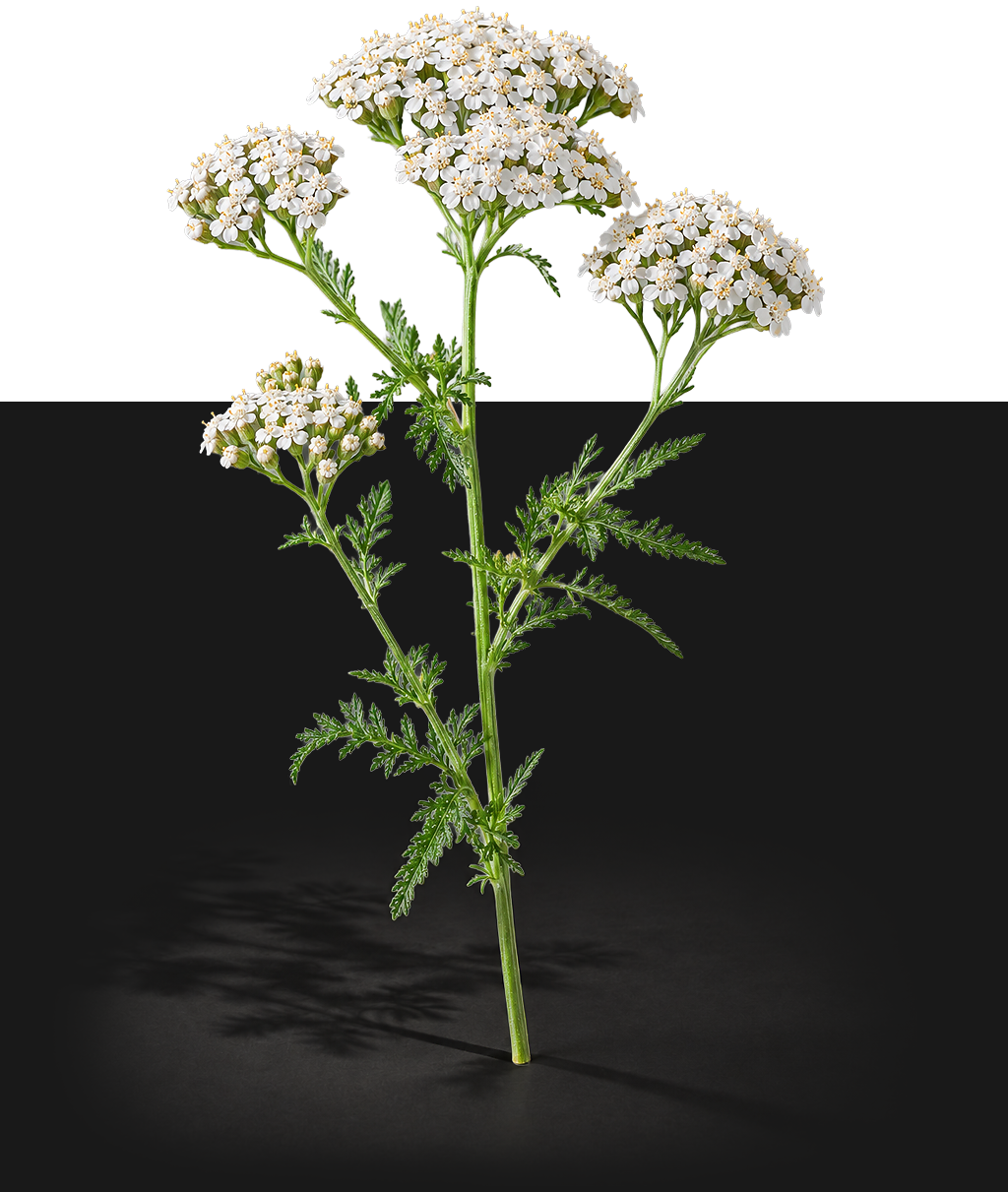
Background
A common wild plant of meadows across Europe. The name refers to Achilles, who in legend used it on wounds. The oil is usually dark blue from chamazulene, though chamazulene content varies by chemotype.
Therapeutic
properties
Anti-inflammatory, wound-healing, antispasmodic, astringent, and traditionally hemostatic.
Detailed uses
Skin
Inflamed skin, minor cuts, scars, oily skin with blemishes, and sensitive skin (diluted at 0.5-1%).
Circulation
Traditionally used for varicose veins and hemorrhoids in diluted creams.
Muscle and joint
Sprains, bruises, and inflammatory joint pain.
Women's health
Heavy or painful periods (massage on the lower abdomen or back).
Respiratory
Congestion with fever (inhaled, diluted blends).
Hair and scalp
Added to rinses for oily scalp and dandruff.
Herbal medicine
Tea
Flowering tops used as a diaphoretic (to induce sweating) in fevers and colds. Often combined with elderflower and peppermint.
Digestive
Bitter tea or tincture before meals to stimulate digestion and bile.
Wound herb
Fresh leaf poultice or powder for minor bleeding, a use that goes back to ancient times.
Sitz bath
For hemorrhoids and pelvic congestion.
Menstrual
Used traditionally for irregular or painful periods.
Blends well with
- Lavender
- Chamomile
- Helichrysum
- geranium
- juniper
- cypress