German Chamomile
(Matricaria chamomilla L.)
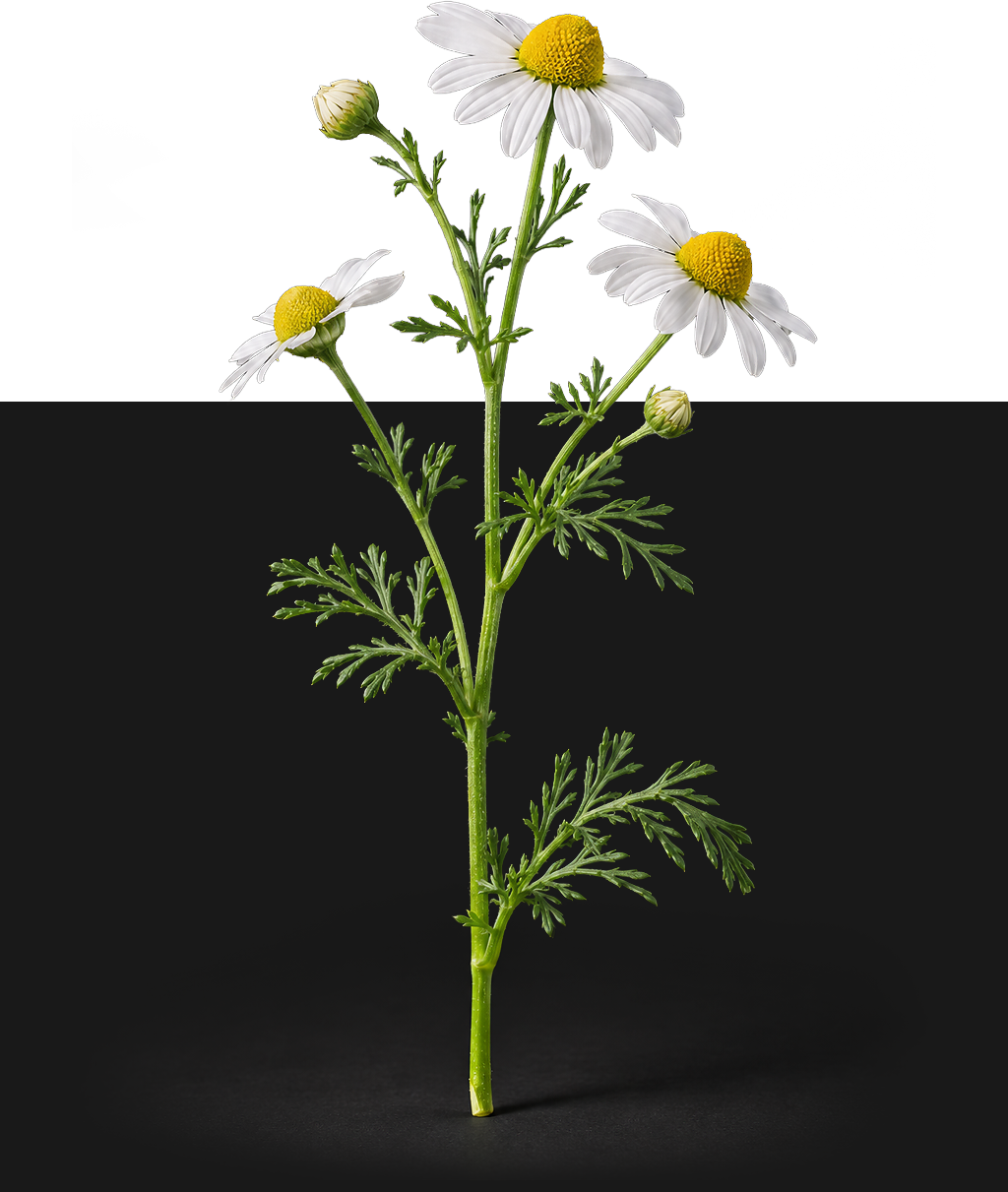
Background
Steam-distilled from the flower heads. The blue color comes from chamazulene, which forms during distillation from a precursor (matricin) in the plant. It is not present in the fresh flower. Main producers are Hungary, Egypt, Bulgaria, and Croatia.
Therapeutic
properties
Anti-inflammatory, antispasmodic, anti-allergic, wound-healing, calming, mildly antimicrobial.
Detailed uses
Skin
Eczema, contact dermatitis, sunburn, minor burns, razor irritation, rosacea-prone skin, and itchy allergic rashes. Add 3-5 drops to 30 ml of calendula or jojoba oil.
Pain and inflammation
Muscle strain, tendon irritation, neuralgia, and joint inflammation (massage oil at 1-2%).
Women's health
Menstrual cramps and PMS tension (lower abdomen massage with chamomile + clary sage or lavender).
Emotional
Irritability, anger, restlessness, and stress-related headaches (diffuser, inhaler).
Digestive (external)
Stress-related stomach tension, with a gentle clockwise abdominal massage.
Bath
3-4 drops mixed into a spoon of milk or honey, then added to warm water.
Herbal medicine
Tea
1-2 tsp dried flowers per cup, steeped covered for 10 minutes. Used for gastritis, bloating, colic, mild anxiety, and sleep.
Mouth rinse
Cooled tea for gingivitis, mouth ulcers, and after dental work.
Compress
For tired or inflamed eyes (cooled tea bags) and wounds.
Steam inhalation
For irritated airways.
Hair
Tea rinse traditionally used to lighten blonde hair and soothe the scalp.