Melissa
(Melissa officinalis L.)
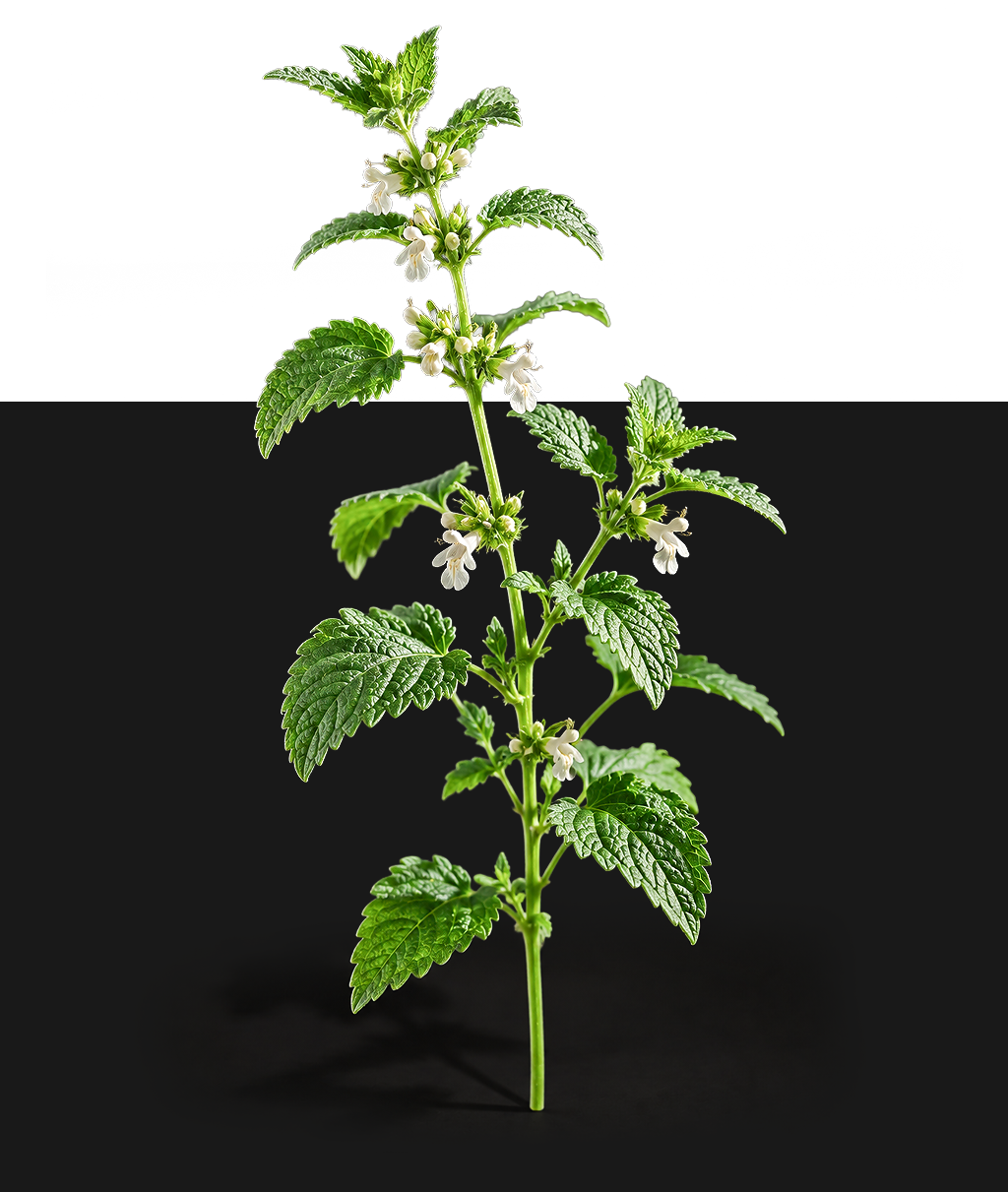
Background
One of the most expensive and most adulterated oils on the market. The plant yields very little oil, so several tonnes of herb are needed per kilogram.
Therapeutic
properties
Calming, antiviral, antispasmodic, mildly hypotensive (traditional), antihistamine-like, antimicrobial.
Detailed uses
Emotional
Anxiety, grief, shock, and nervous exhaustion. A single drop on a tissue or in a diffuser blend is enough.
Sleep
Insomnia from worry (diffuser with lavender and Roman chamomile).
Cold sores (herpes simplex)
Very diluted (about 0.5%) in a carrier, applied to the area at the first tingle. Melissa creams and extracts have the stronger clinical support.
Allergies
Used in blends for hay fever and itchy skin reactions, with caution.
Digestive and nervous
Stress-related stomach tension and palpitations.
Skin
Eczema and fungal irritation (traditional use, always very dilute).
Herbal medicine
Tea
Fresh or dried leaves, 1-2 tsp per cup, for nervousness, sleep, bloating, and mild stomach cramps.
Extracts and tinctures
Used in sleep and anxiety formulas, often with valerian or hops.
Compresses
Leaf poultice for insect bites and cold sores.
Traditional
Monastery "Carmelite water" and many liqueurs used melissa as a nerve tonic.
Blends well with
- Lavender
- Roman chamomile
- Rose
- geranium
- frankincense