Hyssop
(Hyssopus officinalis L.)
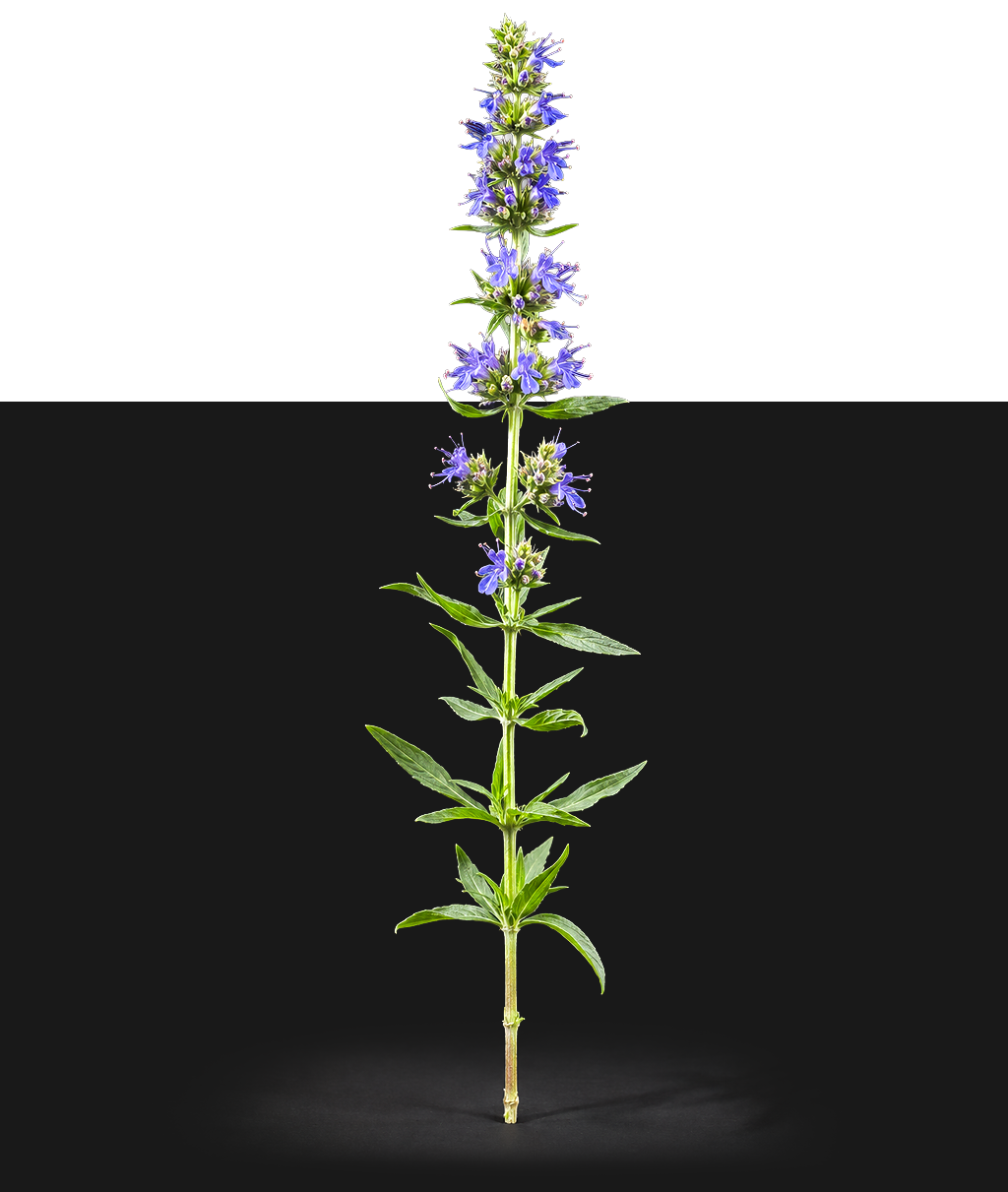
Background
A woody, blue-flowered herb of the mint family, associated with cleansing and purification since biblical times. It is also an ingredient in some herbal liqueurs.
Chemistry
Two main chemotypes. The common one is rich in pinocamphone and isopinocamphone (ketones), plus β-pinene. The variety decumbens has very little ketone and is considered the safer choice.
Therapeutic
properties
Expectorant, mucolytic, antiseptic, antispasmodic, and mildly stimulating.
Detailed uses
Respiratory
Short courses of steam inhalation or chest rub for thick mucus, bronchitis, and stubborn coughs. Use only the low-ketone variety where possible.
Muscle and bruises
Traditionally used for bruises and sprains in very diluted form.
Fatigue and low blood pressure
Mentioned in older aromatherapy texts. Do this only under professional guidance.
Cleansing
Historically used for "purifying" rooms and as an insect deterrent.
Herbal medicine
Tea
Hyssop herb tea has been a classic remedy for colds, sore throat, and cough.
Gargle
Cooled tea for sore throat.
Compress
Fresh herb poultice for bruises and minor skin problems.
Digestive
Small amounts in bitter tonics and liqueurs.
Blends well with
- Rosemary
- thyme
- eucalyptus
- Lavender
- sage
- cedarwood